
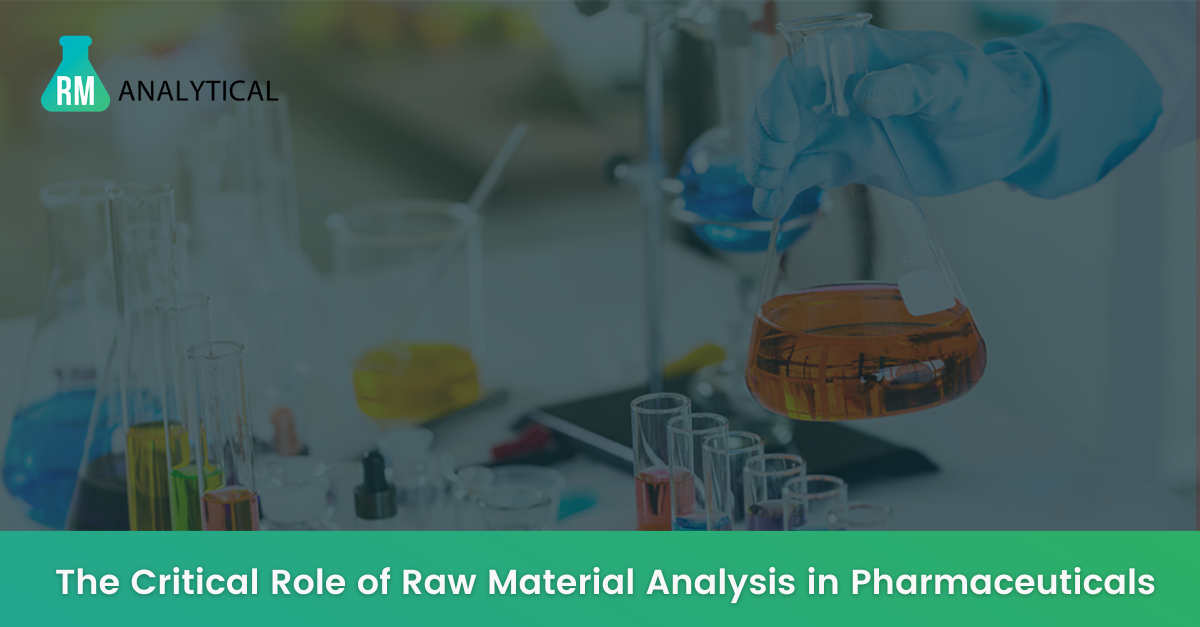
Introduction to Raw Material Analysis
Raw material analysis is the evaluation of all inputs used in pharmaceutical manufacturing, including active pharmaceutical ingredients (APIs), excipients, and processing aids. It ensures that every component entering the production process meets defined quality standards. It serves as the first line of defense in safeguarding drug product quality and patient safety.
Importance of Raw Material Analysis in Pharmaceuticals
Raw material analysis is a regulatory requirement in the pharmaceutical industry. Manufacturers must demonstrate that all components meet predefined specifications prior to use. It supports compliance with current Good Manufacturing Practices (cGMP) by ensuring:
- Each lot of material is verified before use
- Identity is confirmed through appropriate analytical techniques
- Materials are approved or rejected based on objective data
Without proper raw material analysis, the quality of drug products cannot be assured.
Regulatory Foundation
Raw material analysis in pharmaceuticals is strictly regulated under the U.S. Code of Federal Regulations to ensure product quality and patient safety. 21 CFR Part 211.84 – Testing and Approval or Rejection of Components, Drug Product Containers, and Closures requires that every incoming component undergo raw material analysis before it can be used in manufacturing.
Each lot must be sampled, tested, or examined to confirm identity, strength, purity, quality, and absence of contamination. Materials remain in quarantine until the Quality Control Unit approves them for use. While supplier certificates of analysis can be considered, they are acceptable only if the supplier is qualified and their results are validated. Approved materials must be properly stored, rotated using a first-in, first-out system, and retested if exposure to conditions such as air, heat, or long-term storage could affect quality. Rejected materials are strictly controlled to prevent unintended use.
By enforcing these requirements, 21 CFR 211.84 ensures that only verified, high-quality raw materials enter pharmaceutical production, supporting cGMP compliance and safeguarding patient safety.
Compendial Approaches
Raw material analysis is typically performed using compendial methods and validated analytical procedures. Recognized pharmacopeias include:
- United States Pharmacopeia (USP)
- European Pharmacopoeia (EP)
- British Pharmacopoeia (BP)
- Japanese Pharmacopoeia (JP)
Common Techniques in Raw Material Analysis
- Identification
- Infrared Spectroscopy (IR)
- UV-Visible Spectroscopy (UV-Vis)
- Assay and Purity
- High-Performance Liquid Chromatography (HPLC)
- Gas Chromatography (GC)
- Impurity Assessment
- Related substances testing
- Elemental impurities (ICP-MS)
- Physical Testing
- Loss on drying
- Particle size
- Microbiological Testing
- Microbial enumeration
Validated in-house or literature methods may be used where compendial procedures are not available.
Benefits of Raw Material Analysis Before Use
- Ensuring Quality: Raw material analysis confirms that materials meet specifications, supporting consistent product quality.
- Reducing Risk: Early raw material analysis helps prevent deviations, rework, and batch failures.
- Supporting Compliance: Documented raw material analysis demonstrates compliance during audits and inspections.
- Improving Supplier Control: Analytical data supports supplier qualification and ongoing monitoring.
Consequences of Inadequate Raw Material Analysis
- Product Quality Issues: Poor raw material analysis can lead to out-of-specification results and instability.
- Patient Safety Risks: Contaminated or incorrect materials may pose serious health risks.
- Regulatory Impact: Failure to perform adequate raw material analysis can result in warning letters or operational restrictions.
- Financial Losses: Batch failures and recalls can significantly impact costs.
- Reputation Damage: Inadequate raw material analysis can harm an organization's reputation, eroding trust with healthcare providers, patients, and business partners, which can have long-term impacts on market credibility and brand value.
Conclusion
Raw material analysis is a critical component of pharmaceutical manufacturing. It ensures compliance, protects patient safety, and supports consistent product quality. Implementing a strong raw material analysis program helps minimize risk and strengthens overall operational performance.
How RMA Can Support Your Raw Material Analysis Testing Needs
The RMA team brings years of hands-on experience performing raw material and finished product testing for pharmaceutical and related industries. Our scientists and quality professionals work closely with clients to customize fit-for-purpose testing strategies tailored to specific materials, dosage forms, and regulatory requirements.
All testing is performed with strict adherence to cGMP requirements in an FDA-registered and FDA-audited laboratory, ensuring data integrity, regulatory compliance, and confidence in your results.
Whether you are qualifying new suppliers, troubleshooting quality issues, or preparing for regulatory submissions, RMA is here to help.
Contact us today: engage@rawmaterialanalytical.com
Call us: 833-928-8333
Recent Blogs and News
Elemental Impurities Testing: Understanding USP <232>, USP <233>, and ICH Q3D
Elemental impurities in drug products can enter the manufacturing process through several pathways: as residual catalysts intentionally introduced during synthesis, as contaminants from interactions with processing equipment or container/closure systems, or as impurities already present in raw material components. Unlike active pharmaceutical ingredients, elemental impurities provide no therapeutic benefit to patients. In fact, they can...
Why Cleaning Validation is Non-Negotiable in Drug Manufacturing
THE FOUNDATION What Is Cleaning Validation in Pharmaceuticals - and Why Does It Matter? When pharmaceutical equipment moves from one production run to the next, the stakes could not be higher. Trace residues of active pharmaceutical ingredients (APIs), cleaning agents, or byproducts can quietly alter a drug's strength, composition, or effectiveness - putting patients at...
Understanding USP 〈311〉 Alginates Assay: Reliable Testing Support from RM Analytical
Alginates are widely used pharmaceutical excipients known for their thickening, stabilizing, and controlled-release properties. Because these materials play a critical role in product performance and quality, accurate analytical testing is essential to ensure compliance with pharmacopeial requirements and material specifications. One of the key compendial procedures used to evaluate alginate materials is USP 〈311〉 Alginates...