
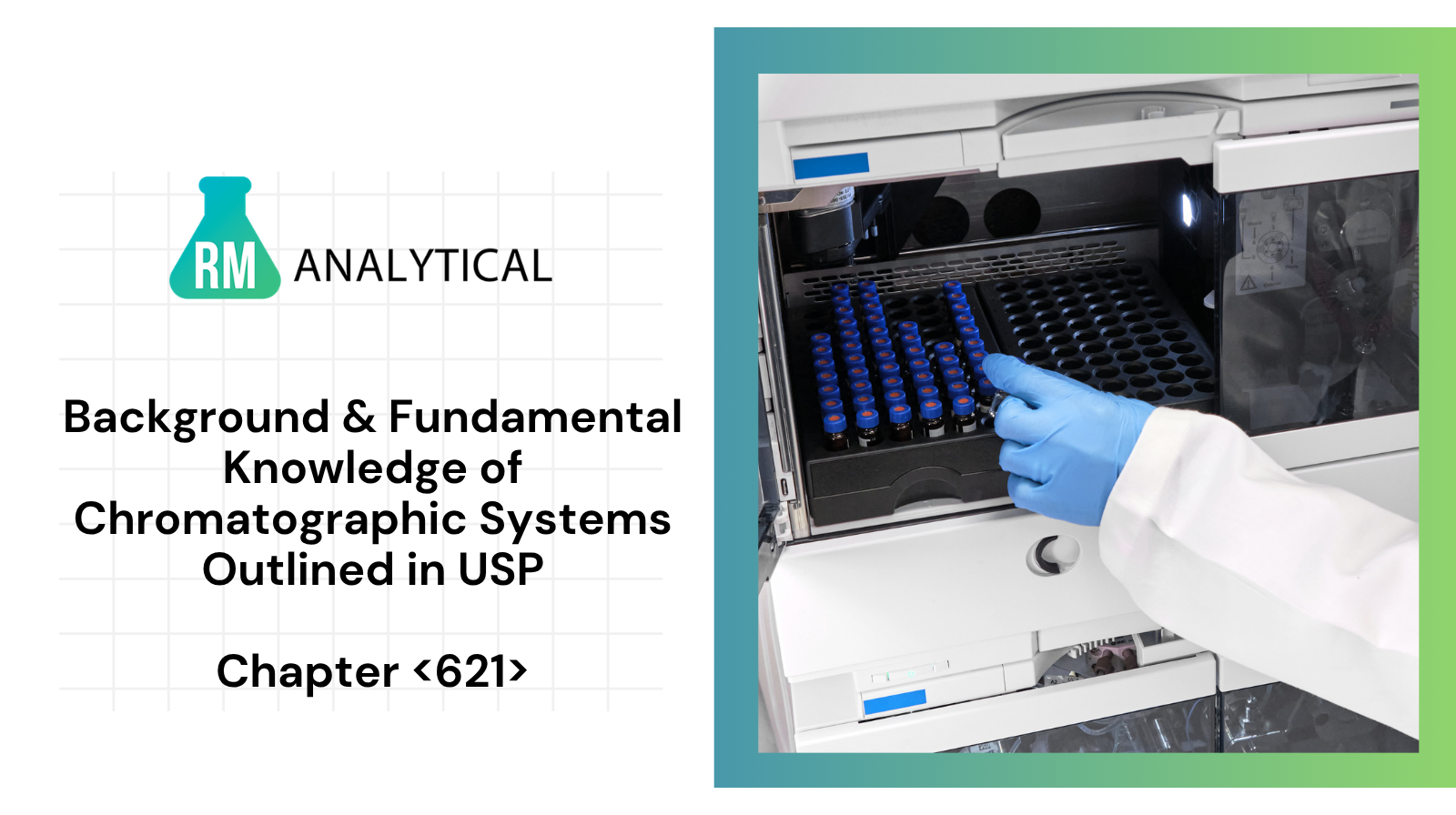
A Brief History & Introduction – By Ardit Ukella
Chromatography is the separation of a mixture based on the differing properties of its analytes, and how those analytes interact with a stationary and mobile phase. The term “chromatography” is named after the Greek words for “color” and “write”. Botanist Mikhail Tsvet is often credited with creating the first form of chromatography. Wanting a way to separate the colorful pigment compounds into plants, he packed calcium carbonate in a simple glass tube and filled the glass tube with various solvents. Once he was finished, he observed colorful banding form through the glass tube.
A chromatography setup, in its most simple structure, consists of a mobile phase and a stationary phase. The mobile phase carries the sample and analytes through the stationary phase. The stationary phase is a solid or a liquid bound to a solid support that remains fixed while analytes pass through it, and separate the analytes based on its interactions with it. Depending on how long the analytes interact with the stationary phase before hitting the detector and the type of chromatography used, it will give a certain retention time or retention factor. A retention time is the amount of time that the analytes travel through the stationary phase. A retention factor is a dimensionless value found in specific types of chromatogrpahy, which details how long analytes are retained in the stationary phase.
With most modern automated forms of chromatography, once analytes interact with a column, they are put through a detector; the type of detector used depends on the form of chromatography being used. The signal intensity of the analytes is then plotted as a function of the run time on the resulting chromatogram. From these chromatograms, and depending on the type of chromatography used, various calculations can be done to tell us more about the analytes such as their retention factors (Rf), capacity factors (k or k’), peak resolution values (R), and even concentrations.
Different Forms of Chromatography
Below are 7 of the most common forms of chromatography found in laboratory settings. All these chromatographic systems have applications in both R&D and Quality Control settings. LC & GC are especially utilized in USP, EP, and JP chapters for testing raw materials, packaging components, and various other products. All these forms of chromatography are also outlined in USP Chapter <621> Chromatography.
1. Liquid Chromatography:
Separation of a mixture based on polarity, commonly used for non-volatile compounds. Often optimized by altering mobile phase concentrations, column selections, split ratios, and flow rate. Can be utilized in a low pressure (LPLC), high pressure (HPLC), or ultra pressure (UPLC) environment.
- Typically, liquid chromatography consists of 2 different setups:
- Normal Phase: Consists of a polar column and nonpolar mobile phase. The column is made of silica or alumina.
- Reverse Phase: Consists of a nonpolar column and a polar mobile phase. The column is typically filled with a long hydrocarbon chain such as a C18 chain.
- There are 2 detectors commonly used in pressurized liquid chromatography setups:
- VWD (Variable Wavelength Detector): Scans at one specific wavelength. It is considered more efficient in quality control settings due to their linearity with results.
- PDA (Photodiode Array) Detector: Measures across a range of wavelengths. The PDA is a much more informative detector, as the VWD scans at specific ranges, while a PDA scans at an unfixed range that can pick up a variety of different compounds and impurities.
- Mobile phase mixtures are often done in one of 2 different setups:
- Isocratic: Same mobile phase flows through the column without change in composition.
- Gradient: Change of mobile phase as the run proceeds; often gives better elution and separation with a mixture of more diverse analytes.
2. TLC (Thin Layer Chromatography):
A type of chromatography related to liquid chromatography. This manual form of chromatography consists of a container of a fixed amount of liquid mobile phase with a solid stationary phase on a plate. The analytes are put on the plate by a capillary tube at an initial point on the plate, and travel up the plate as they interact with the mobile phase. Once they are finished traveling, they are observed under UV light. This type of chromatography is often optimized by changing mobile phases and plate materials. This setup is traditionally done in a normal phase setup, with a polar silica plate and a nonpolar mobile phase mixture.
3. Paper Chromatography:
A type of manual chromatography that has a traditional setup, consisting of dissolved analytes mixed with a mobile phase that is more nonpolar, and a polar cellulose-based paper stationary phase. The analytes travel at different speeds based on how they interact with the cellulose paper. This type of chromatography is often optimized by changing mobile phases and types of paper used.
4. Gravity-Fed Column Chromatography:
Another manual type of chromatography consisting of a glass column with a stopped opening packed with a solid stationary phase and a liquid mobile phase. The stopcock is opened and the mixture is collected in small simple fractions. This type of chromatography is often optimized by changing mobile phases and stationary phases. It can be set up in multiple different ways, with different stationary and mobile phases of various properties.
- The analytes are loaded 2 separate ways:
- Dry Loading: Analytes are loaded in the column in a solid support mixture consisting of celite or silica before the mobile phase is added.
- Wet Loading: Analytes are loaded in the column after they are dissolved in a small amount of solvent before the mobile phase is added to the column.
5. Gas Chromatography:
Separation of a mixture based on boiling point as the primary property, at times using a secondary property, such as polarity, when boiling points of analytes are too close together. This form of chromatography is commonly used for volatile compounds and gas purity testing. The mobile phase consists of inert gases such as Nitrogen, Helium, or Hydrogen, and is typically called a carrier gas. It is often optimized by creating temperature gradients, column selections, split ratios, and carrier gas flow.
- The Gas Chromatography setup offers different column choices:
- Open Tubular Columns: An open capillary style column that the analytes travel freely through in their gaseous state. Can have a coating around the inner wall of the column, which typically assists in elution by bringing out a second property of the analytes. (E.g. open tubular column coated with alumina for polarity)
- Packed Columns: A larger diameter traditional column packed with a supported liquid coating. These are not as common since the advent of open tubular capillary style columns; however, they have their use in more niche applications across industry and R&D settings.
- There are 2 detectors commonly used in gas chromatography setups:
- FID (Flame Ionization Detector): Utilizes a hydrogen flame, which ionizes the analytes as they go through the flame. This creates a current in which the higher the amount of the analyte, the greater the signal. This detector is better suited for more complicated analytes and is often considered more sensitive.
- TCD (Thermal Conductivity Detector): A more universal detector that detects how well the analytes in their gas state conduct heat. It is often more suitable for simpler compounds and is also the standard detector used for testing gas purity.
6. Size Exclusion Chromatography:
Separation based on the size of the molecule. Popular in studying macromolecules (proteins, carbohydrates, etc.), polymers (HDPE, PP, LDPE, etc.), and other molecules that are large enough to be separated via size. Columns typically have pore sizes that interact with molecules depending on how well they fit into the pores.
- There are 2 primary detectors commonly used in size exclusion setups:
- Differential Refractive Index (DRI) Detector: Measures changes in the refractive index from the way the sample elutes; typically used for polymers and other compounds that don’t show interactions with UV light.
- UV-VIS Absorbance Detector: Detects molecules with chromophores (aromatic rings, double bonds, carbonyls, azides, etc.), commonly used to detect proteins or nucleic acids.
7. Ion Exchange Chromatography:
Separation based on ionic charge of a molecule. Common with separating organic acids, bases, and other charged particles. It relies on buffers as the mobile phase to manage the pH of the setup and how well the analytes elute. Improved elution of the analytes is dependent on how opposite the charge of analytes is to the stationary phase. It is often optimized by adjusting pH of mobile phases in order to change how well analytes interact, adjusting flow rates, and using salt gradients.
- There are 2 separate setups for ion exchange chromatography:
- Anion Exchange Chromatography: Used to bind negatively charged molecules; has a positively charged stationary phase and a pH-controlled buffered mobile phase. Used in separating inorganic anions, acidic proteins, and nucleic acids.
- Cation Exchange Chromatography: Used to bind positively charged molecules; has a negatively charged stationary phase and a pH-controlled buffered mobile phase. Used in separating compounds such as peptides, basic proteins, and inorganic cations.
- There are 3 common detectors found in this type of chromatography:
- Conductivity Detector: Measures the change in electrical conductivity as ions elute. This is proportional to how much of the analyte is in the mixture being analyzed. These detectors can cause some background noise, and the conductivity is often stamped down by using an ion suppressor to improve the signal-to-noise ratio.
- UV-VIS Absorbance Detector: Detects molecules with chromophores (aromatic rings, double bonds, carbonyls, azides, etc.).
- ECD (Electrochemical Detector): Commonly used for specific organic compounds and metal ions. The most sensitive of the 3 detectors listed is capable of being oxidized or reduced by an electrode depending on the application.
Conclusion
Chromatography is an extremely often used tool in the arsenal of instrumental analysis. It is a very common sight to find a chromatographic setup or instrument in an analytical testing lab, as it has its applications in pharmaceutical testing and R&D environments. HPLC & GC specifically have their uses in USP/NF, EP, and JP chapters as they are used to test packaging components, medical gases, raw materials and finished products of the pharmaceutical industry. Regardless of field, chromatography’s wide range of applications make it an integral part of testing in accordance with USP Standards.
The RMA team brings extensive hands-on experience supporting chromatographic method development, optimization, and analysis of raw materials, packaging components, and finished pharmaceutical products. Our scientists and quality professionals work closely with clients to design fit-for-purpose chromatographic strategies, including LC, GC, and other techniques, tailored to the specific properties of analytes, matrices, and separation requirements. This ensures that each method is aligned with the underlying chemistry and delivers accurate, reliable separation and detection.
All chromatographic testing is performed in full compliance with cGMP requirements within an FDA-registered and FDA-audited laboratory, ensuring data integrity, regulatory alignment, and confidence in the precision and reproducibility of results.
Whether you are evaluating raw material purity, identifying and quantifying impurities, supporting method development, troubleshooting analytical challenges, or generating data for regulatory submissions, RMA delivers robust and compliant chromatographic solutions to meet your needs.
Contact us today: engage@rawmaterialanalytical.com
Call us: 833-928-8333
Recent Blogs and News
Background & Fundamental Knowledge of Chromatographic Systems Outlined in USP – Chapter <621>
A Brief History & Introduction - By Ardit Ukella Chromatography is the separation of a mixture based on the differing properties of its analytes, and how those analytes interact with a stationary and mobile phase. The term “chromatography” is named after the Greek words for “color” and “write”. Botanist Mikhail Tsvet is often credited with creating the first form of chromatography. Wanting a way to separate the colorful...
Importance of Viscosity Determination in Raw Materials and Finished Products in Pharmaceuticals
Viscosity is one of the most critical and often underappreciated quality attributes in pharmaceutical development and manufacturing. It is a key performance indicator that directly influences formulation behavior and final product performance. During manufacturing, viscosity governs how materials mix, flow, transfer, and fill, impacting everything from scale-up and equipment selection to batch reproducibility. In formulation design, it plays a central role in ensuring...
The Critical Role of Raw Material Analysis in Pharmaceuticals
Raw material and finished product testing isn't optional in pharma; it's federal law. Learn why the FDA mandates these crucial tests for patient safety and cGMP compliance